CHAPTER III / THE LIGHTS WE LEAVE
Black Star: Relay
Leave a light behind. Someone is still listening.
The lights will wait.
Three lights. A way home.
Mara flies. Sol waits at the port. Place up to three reusable beacons to connect the port to the far array. Send a new call there, receive Nia’s reply, then fly home. Old antennas can help.
Arrows / WASD or the pad: fly. Release to brake automatically. Tap Space or the named button to place, recover or use something nearby.
The signal, and the story
A black hole’s gravity bends light; one source can appear along multiple paths. Light from surrounding matter reveals an otherwise dark object. The paired NIA-017 arrivals are an authored demonstration, not a reconstruction of a measured black hole.
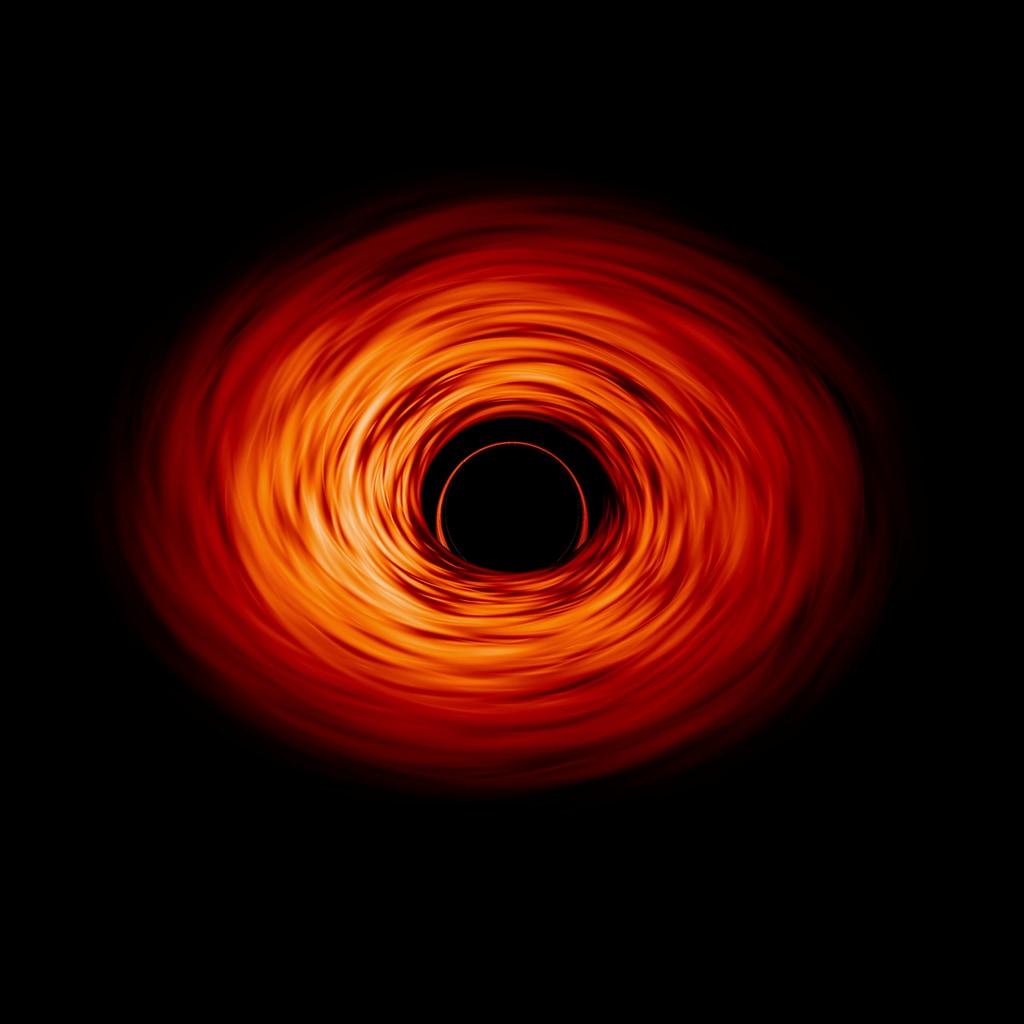
NASA simulation, not a photograph. Bent light lets the far side of the disk appear above and below the shadow. Our beacon lines are a separate navigation display.
NASA’s Goddard Space Flight Center / Jeremy SchnittmanFictional work zone outside the event horizon. Flight assist, station-keeping beacons, power fields, chart illumination and travel times are designed for play. The beams and sounds are instruments, not visible light roads or sound in vacuum.
Earth’s messages span twenty-three years. They are old recordings, not years lost during this flight. Recovering them is optional.
Circle: beacon reach. Green: connected to home. Amber: isolated. A line cannot cross the central safety zone. Old antennas are optional places to rebuild.
Checkpoints last for this visit. Reentering starts a new journey.